Organisation pour le Développement de l’Éducation, des Ressources et des Savoirs AccessiblesNonprofit association · Paris

For teachers and activity leaders

Resources ready for the classroom

Everything ODERSA publishes is designed to be used as it is in a classroom, a workshop, or a public library: free, no account, no student data, and under a license that lets you adapt freely. Here is how to put it to use, concretely.

The resource available

The resource available

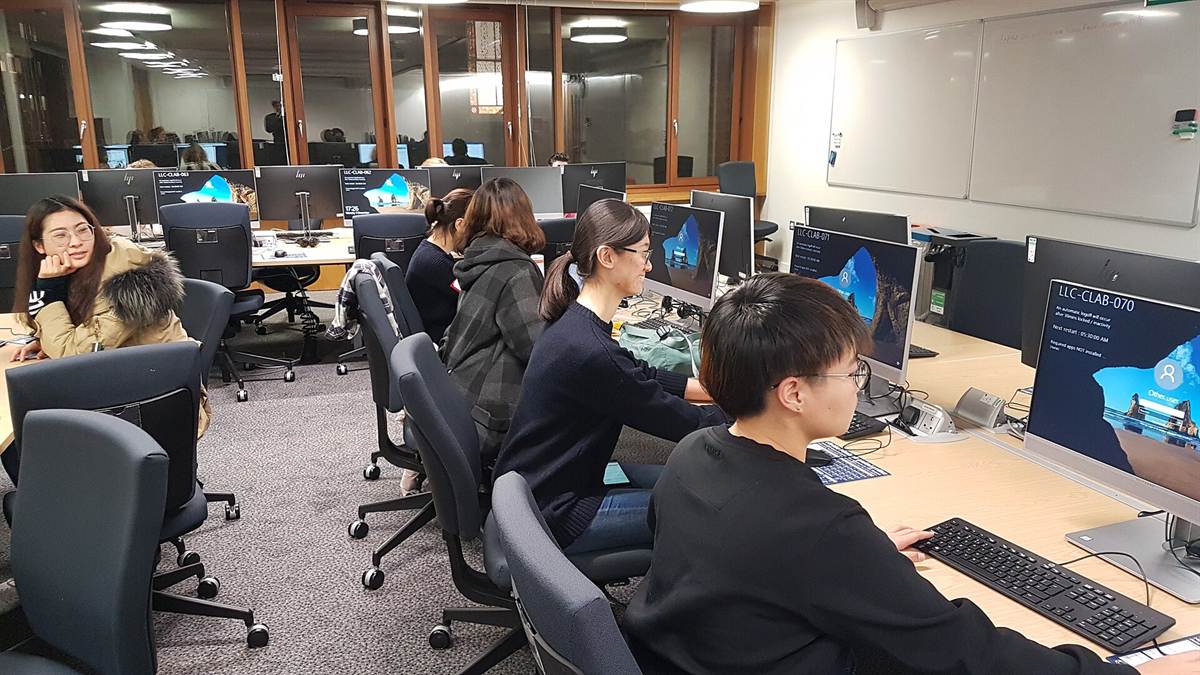
Students working side by side in a university computer room

Avant d’y croire

Our site for practicing information verification: 10 habits explained in plain language and 750 practical cases (misleading headlines, images torn from their context, fake experts, distorted figures), sorted into 10 categories and 3 difficulty levels. The cases are realistic and entirely fictional: your students practice the mechanisms without being exposed to real misinformation.

Three ways to use it

Three ways to use it

Projected, for the whole class

A projector · 20 to 55 minutes

  1. Open avantdycroire.odersa.org and choose a case category: headlines, images, experts, figures…
  2. Project a case: the class votes by a show of hands (“Do we believe it? Do we check it?”).
  3. Reveal the answer and trace the clues back together: this is where the session really happens.
  4. Close with one habit from the booklet, to remember for the week.

Independent practice, at each student’s own pace

Phones or a computer room · 15 to 30 minutes

  1. Students open the site: no account to create, nothing to install.
  2. Each one picks a category and a level, and practices at their own pace.
  3. The site works offline after the first visit: the session survives a flaky network.
  4. At the end, each student reports the case that tricked them, and the class discusses it.

On paper, no screen needed

A printer · workshop, advisory period, or club time

  1. Print the booklet of 10 habits, ready to photocopy.
  2. Hand it out, or post the habits one by one around the room.
  3. Have students work in small groups: each group presents one habit to the others.
  4. The booklet is under CC BY 4.0: photocopy it, cut it up, adapt it, no need to ask.

What it takes, and nothing more

What it takes, and nothing more

Equipment
A projector, phones, a computer room, or a printer: any one of the four is enough.
Accounts
None. Not for you, not for your students.
Installation
None: the site opens in a browser, on any device.
Connection
Needed for the first visit only; after that, the site works offline.
Budget
Zero. Everything is free, with no paid tier and no usage limit.

Compatible with your school’s requirements

Our sites collect no data: no student accounts, no cookies, no trackers, no requests to third-party servers. No student data is processed, so there is no consent to collect, no register to fill out, and no compliance file to build before you can use them. Your school’s digital lead can check this in one minute, with the network inspector open.

Our zero-data commitment, in detail

Adapt everything, no permission needed

The content is published under a Creative Commons BY 4.0 license: photocopy it, edit it, translate it, upload it to your own workspace, fold it into your own course materials. The one condition fits on a single line:

Source: ODERSA, odersa.org (CC BY 4.0)

And to go further

Would you like a workshop built together with you, in person, at your school or organization? That is one of the association’s activities: the format gets built together, and the session stays free for participants.

Propose a workshop

Keyboard shortcuts

TabMove from link to link
EnterOpen the link, or expand and collapse a question
?Open this help
EscClose the panel or this help